Creatures of Interest
From the previous workflows, we have determined that species abundance changes with the season and site. For example, of the 17 taxa indentified in our samples, Errantia is the only one affected by a significant site x season interaction. Others, such as Caudofoveata and Ostrocoda where affected by site differences, whereas Bivalves were affected by seasonality.
| site | season | interaction |
|---|---|---|
| Sedentaria | ||
| Errantia | Errantia | |
| Caudofoveata | Caudofoveata | |
| Ostracods | ||
| unidentified | unidentified | |
| Bivalvia |
| site | week | interaction |
|---|---|---|
| Sedentaria | Sedentaria | Sedentaria |
| Errantia | ||
| Caudofoveata | ||
| Ostracods | ||
| unidentified | unidentified | unidentified |
| Sipuncula | ||
| Bivalvia | Bivalvia | |
| Gastropoda | Gastropoda | |
| Copepoda | ||
| Decapoda |
Here we explore the biology and ecology of these taxa in more detail. Where do these creatures live? What do they eat and how do they eat it? What eats them? How do they protect themselves? How do they breath?
1. Polychaetes
a. Errantiata
Also known as Aciculata these are worms that move with their chaetae.
Errantiata are a subclass of polychaetes (segmented marine worms). They are free-living and can be found throughout the world in marine and brackish environments. They usually have well developed jaws and sensory organs.
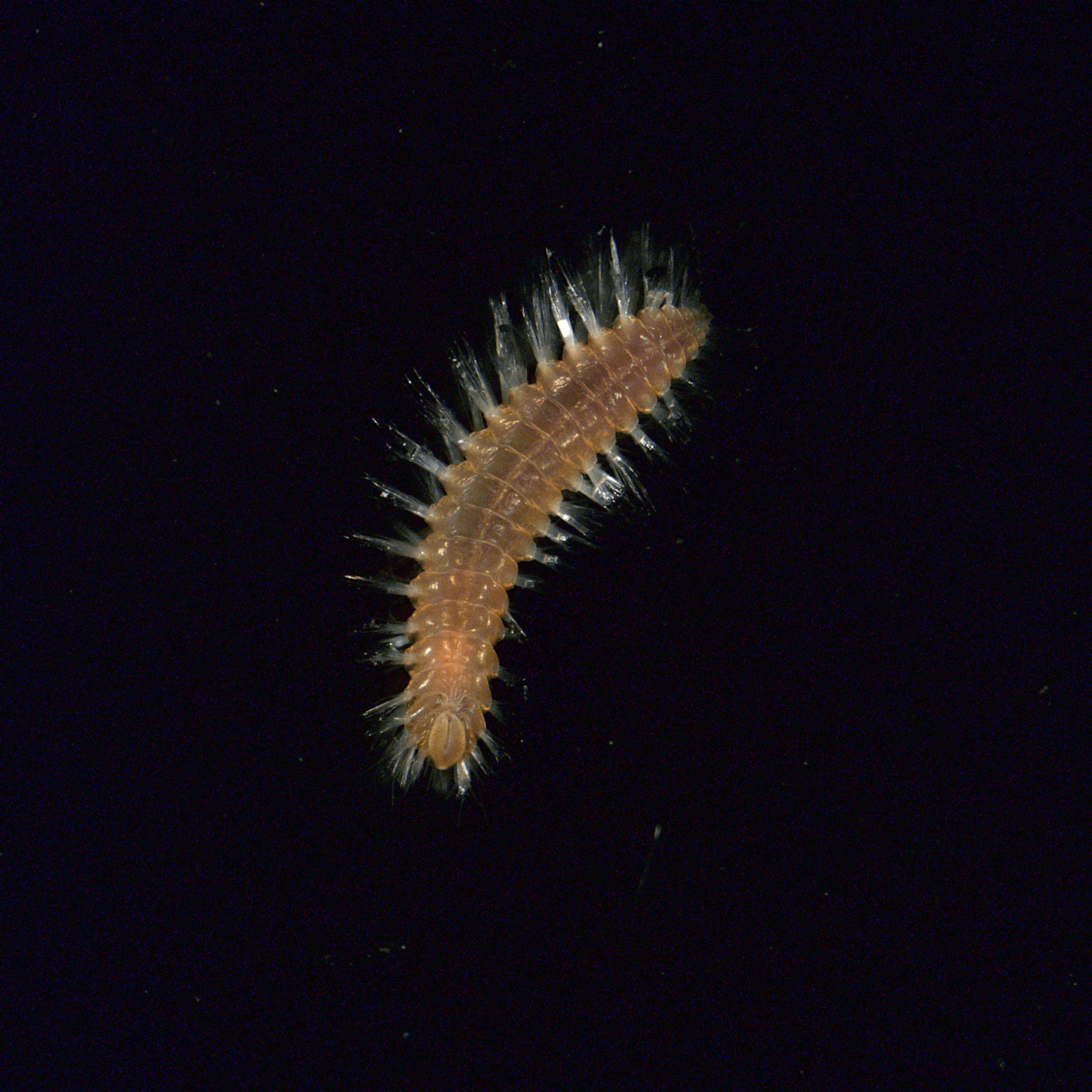
Figure 1: Fireworm found on reef matrix near Almirante
b. Sedentaria
Worms that don’t move Sedentaria are non-mobile polychaetes (subclass). They often have specialized gills or tentacles used for respiration and deposit or filter feeding.
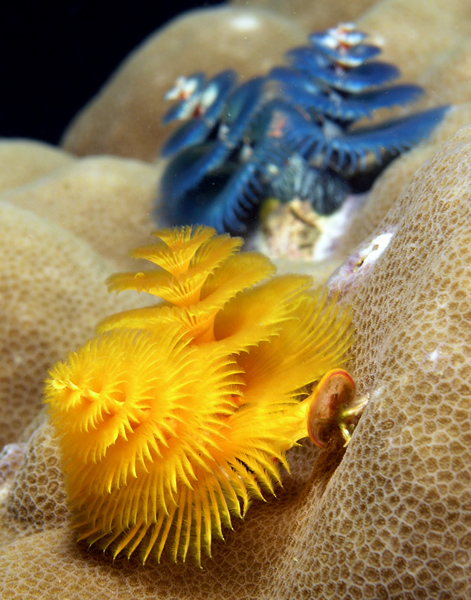
Figure 2: Figure from: https://upload.wikimedia.org/wikipedia/commons/9/93/Spirobrancheus_giganteus.jpg
2. Echinodermata
a. Ophiuroidea
Class of Echinodermata that are closely related to the starfish. These brittle and basket stars are extremely common and abundant in most benthic ecosystems. They are a large group and are found throughout the world’s oceans, common in shallow marine habitats. They are dominant in the deep sea and in deep water but are also one of the most abundant invertebrates on coral reefs. Most are scavengers and detritus feeders, but they also hunt small crustaceans and worms.
They can crawl quickly across the sea floor using their flexible arms. Other species burrow and live in the sediment. These species are known to have hemolymph and other specialized oxygen carrying pigments in their blood that allow them to thrive in deoxygenated sediment.
Gas exchange occurs through cilia-lined sacs called bursae that open and take in water in, and ventilate by pumping their disc. They are important in the diets of many crustaceans and fish, and some species are known to burrow into the sediment.
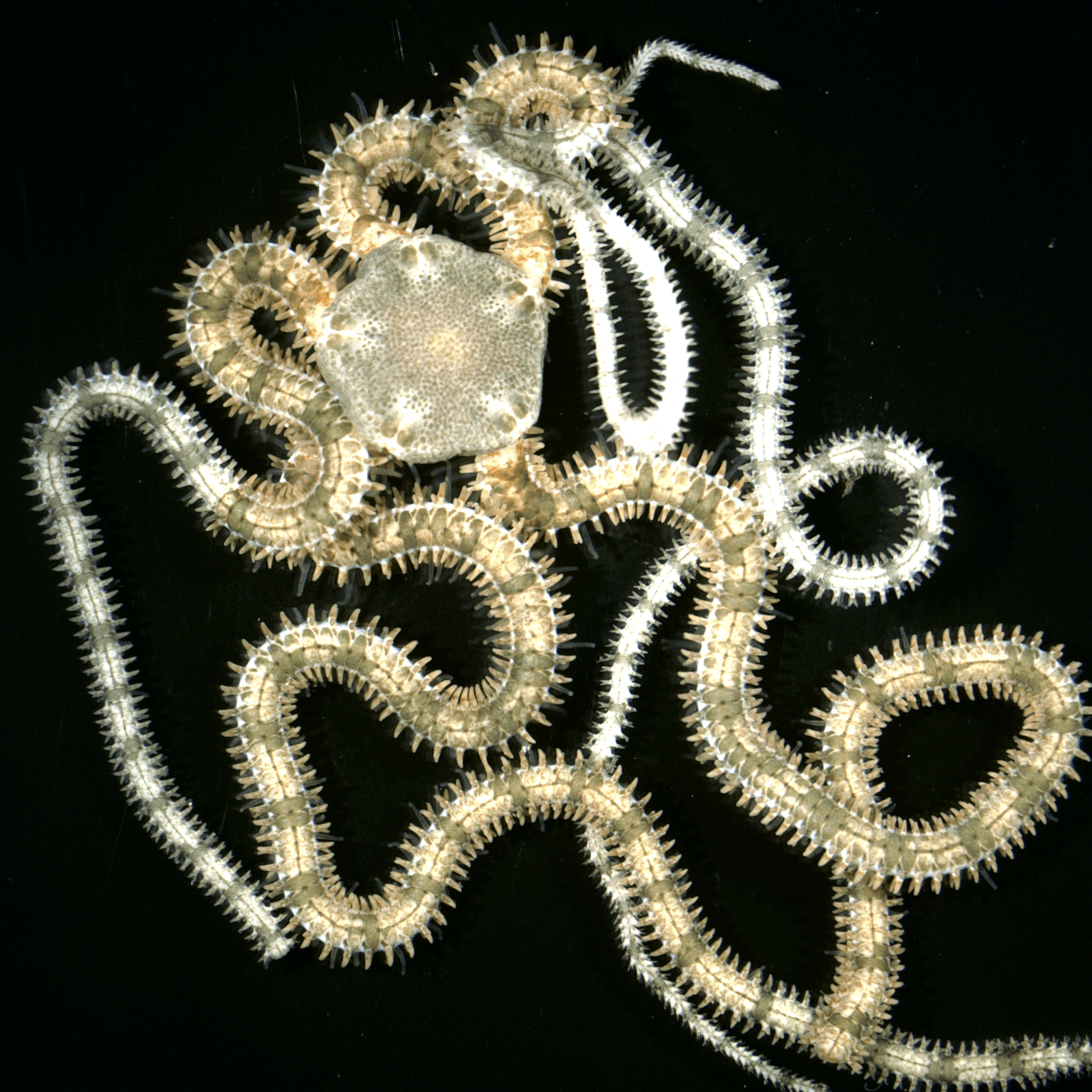
Figure 3: Ophionereis reticulata from Almirante Bay
b. Echinoidea
Class.
These are benthic marine species, such as sea urchins, sand dollars, and are primarily grazers or scavengers. Many are considered to be important herbivores.
Most sea urchins possess five pairs of external gills attached to the peristomial membrane around their mouths. These thin-walled projections of the body cavity are the main organs of respiration in those urchins that possess them. Fluid can be pumped through the gills’ interiors by muscles associated with the lantern, but this does not provide a continuous flow, and occurs only when the animal is low in oxygen. Tube feet can also act as respiratory organs, and are the primary sites of gas exchange in heart urchins and sand dollars, both of which lack gills. The inside of each tube foot is divided by a septum which reduces diffusion between the incoming and outgoing streams of fluid.
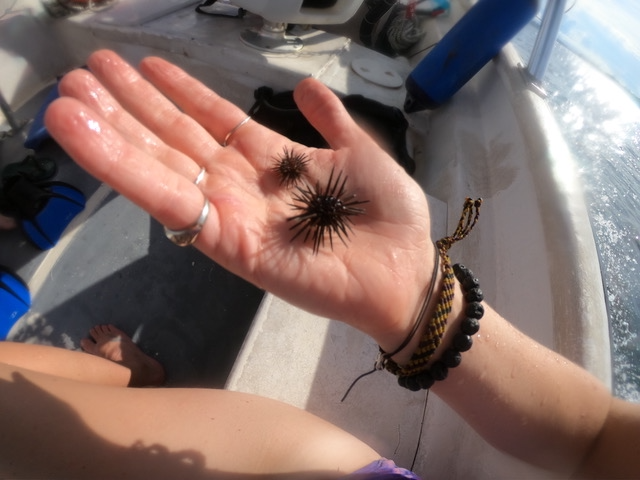
Figure 4: Echinometra viridis from Almirante Bay
3. Mollusca
a. Caudofoveata
Class.
Caudofoveatans are worm-like molluscs that generally are very small, mostly only few centimetres long, and are the least known of all the molluscs. It is somewhat unusual that we found so many of these in our Almirante Bay samples because this mollusc class is typically found in deep-water (6000 m or more)! They are carivourous and feed on detritus and bottom-dwelling microorganisms. They have a strange scale matrix that makes up their ‘shell’ (atypical for molluscs).
. [Original image](https://commons.wikimedia.org/wiki/File:Chaetoderma_nitidulum.jpg) retrieved from Wikimedia Commons.](include/trepo/macrotaxa/chaetoderma.jpg)
Figure 5: Chaetoderma intermedium, a caudofoveatan by Elena Gerasimova/Universitetsmuseet i Bergen, Universitetet i Bergen. Licenced under CC BY-SA 4.0. Original image retrieved from Wikimedia Commons.
b. Bivalvia
Class of molluscs.
c. Gastropoda
Class of molluscs.
d. Scaphopoda
Class of molluscs.
Also known as tusk shells, these distinctive molluscs breath with their feet. Actually they use their foot to pump water through their body and this allows there tissues to oxygenate (like a heart would function in most animals). They have conical shells that are open at both ends and live their adult lived buried in the sediment with their head pointed downward (imagine living your entire life with your head stuck in the mud?!). The opening on the narrow posterior end of their shell sticks out of the mud and takes in seawater for oxygen and expells waste.
These animals have lost their have gills and rely on their mantle tissues to not only produce their shell, but also to function like a gill. Their mantle is fused into a tube that surrounds the body and water is circulated around the cavity by cilia, When oxygen gets low they eject the water through the top end of the shell by contracting their foot (i.e breath with their feet)!
These also are carnivourous, searching for food in the sediment. This can be forams, detritus and other molluscs. They have tiny sense organs (statocysts) to detect their food and they use threadlike cilia-bearing tentacles (captacula) to probe for food.
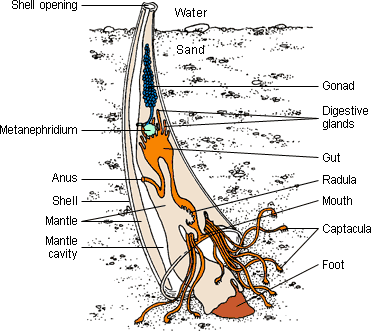
Figure 6: Figure from: https://ucmp.berkeley.edu/images/taxa/inverts/scapho_anatomy.gif
More details:
- Ron Shimek’s [Scaphopod Natural History page] (http://www.ronshimek.com/scaphopod.html) includes more details about the group,
- As does [https://animaldiversity.org/site/accounts/information/Scaphopoda.html]{University of Michigan Museum of Zoology’s Animal Diversity Web}
4. Crustacea
a. Amphipoda
Order of Crustacea.
Small, mostly marine crustaceans typically less than 10 mm long. They are one of the most specious and morphologically diverse groups. They are poor swimmers, highly modified to crawl on the bottom of the benthos. The have gills on their thoracic segments (pleopods), and an open circulatory system with a heart, haemocyanin and haemolymph. These are brooding species, and females have a marsupium in which they hold developing eggs. There are no larval stages, hatching as a juvenile form. Dissolved oxygen is known to be directly correlated to their size. Long-term hypoxia threatens population persistence.
They are highly abundant in the marine environment, and as such are important to the food chain, as herbivores, detritivores, micropredators and scavengers (Lowry and Springhorpe 2001).
Fun fact: When you squish them they emit a strong smell of old gym socks.
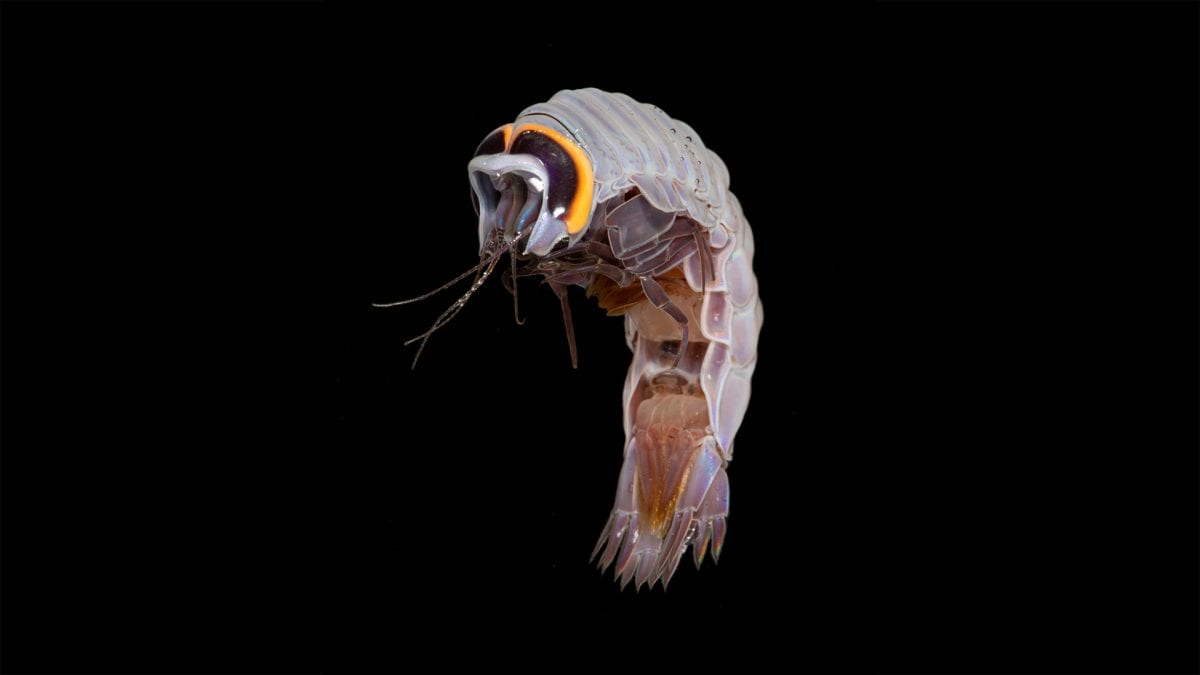
Figure 7: Figure from Paul Caiger:https://www.whoi.edu/wp-content/uploads/2020/03/OTZ-Amphipod_Caiger_2020-1-1200x675.jpg
b. Cladocera
Sub-order - water fleas, benthic predator.
Small crustaceans between 0.2 -6.0 mm long with a compound eye. Most live in fresh water. Only eight species have adapted to marine environments, these are all in the Podonidae family (Branchiopoda). Marine species are rare. They have fascinating reproductive cycles that support their persistence in some of the harshest environments on Earth. When environmental conditions are good, females asexually clone themselves over and over again. When conditions deteriorate, the females produce males which then sexually reproduce. The eggs they produce are called resting or dormant eggs and they can remain viable in the environment for long periods of time, only hatching when conditions are sufficiant to sustain life (or when they reach a habitat with happy conditions). This cyclical parthenogenesis mode of life evolved in the Permian period.
They do have gills, they are mostly benthic, and they have huge eyes. Instead of being filter feeders like their freshwater relatives, they are active predators.
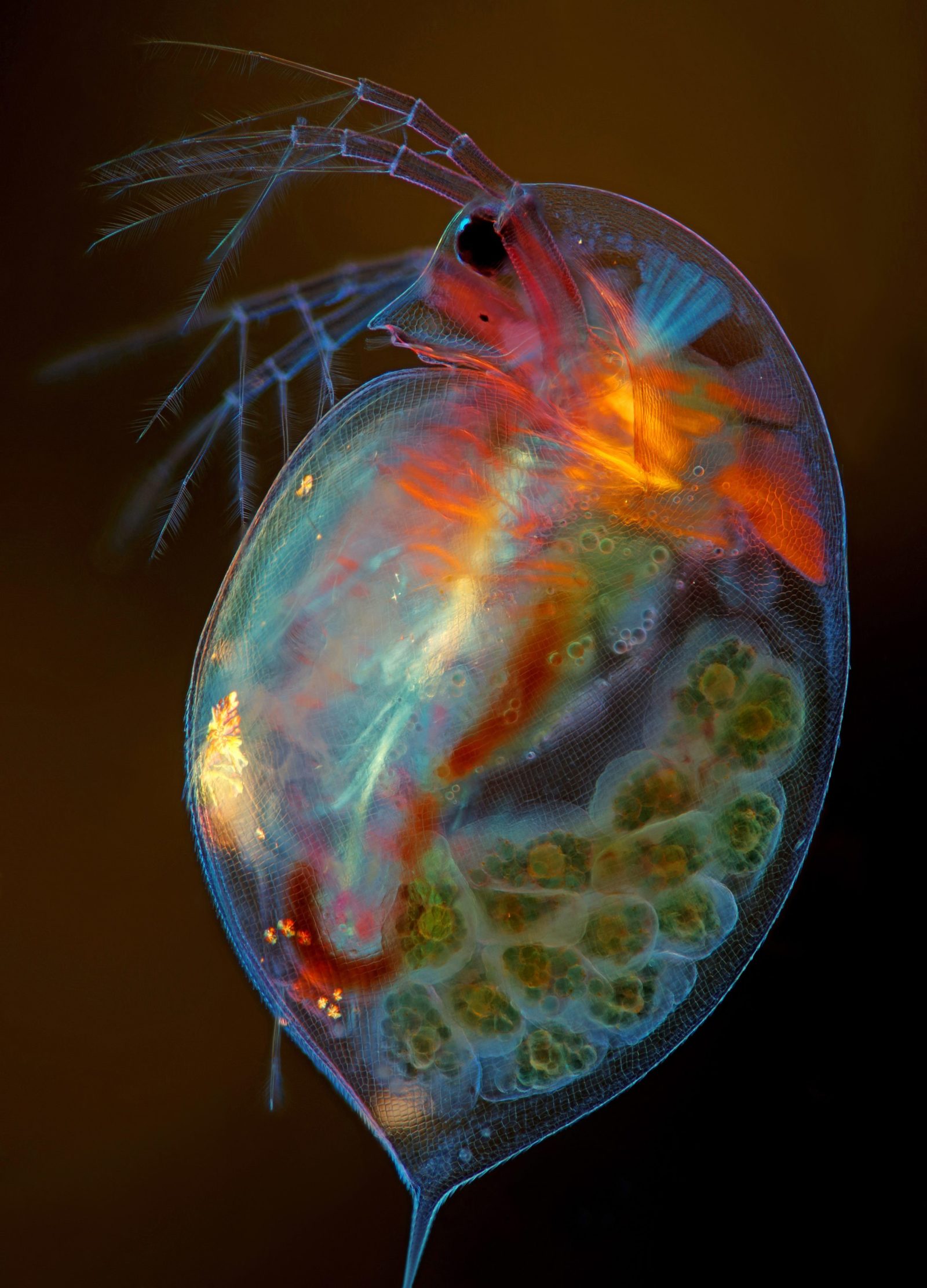
Figure 8: Figure of gravid female water flea (Daphnia magna) carrying egg from Marek Miś :https://www.nikonsmallworld.com/images/photos/2019/_photo1600/15-1.jpg
c. Copepoda
Sub-class.
There are three order of copepods, one of which are mostly benthic: the Harpacticoids. This is a large highly diverse order of copepoda. They are known to be highly adaptable (unlike amphipods which are often highly sensitive). They are also the second largest meiofaunal group in marine sediment after nemotodes.
Some are known to also control dinoflagellate populations, eating the most unpalatable and toxic species. They are important for nutrient recycling and appear to have an important impact on denitrification and sediment nitrogen fluxes (Stock 2014).
They are uniquely distinguishable from the other types of copepods (generally) by the antennae shape. You can see here the short antennae with many ‘whiskers’ or setae. These are specific adaptations to survive in the benthos, and allow them to burrow into the sediment,feel around for food while still allowing for short swims. They are well known to migrate in and out of an environment on a diel basis, often coming out from the sediment at night to forage for food.
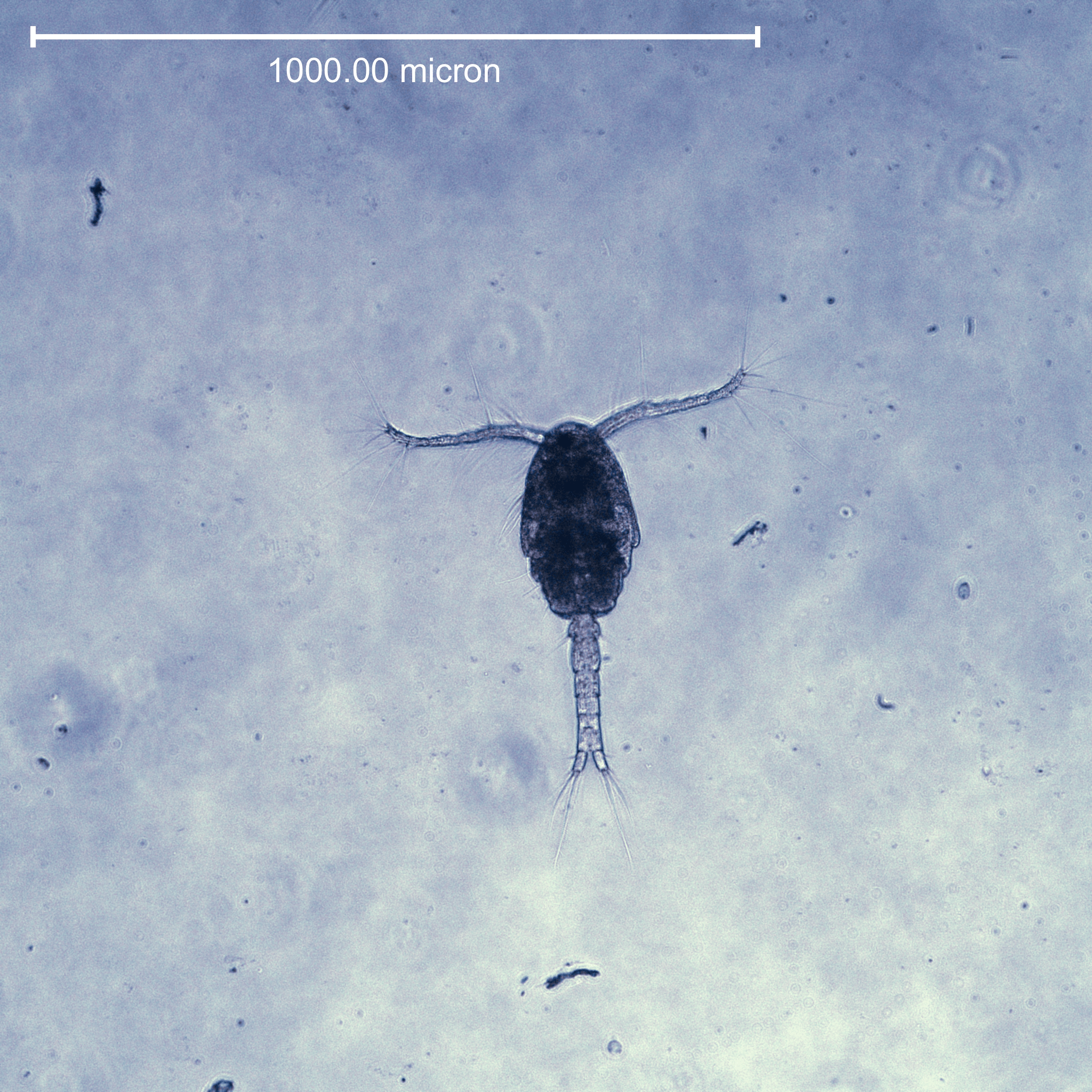
Figure 9: Harpacticoid copepod from Almirante Bay
d. Decapoda
Order.
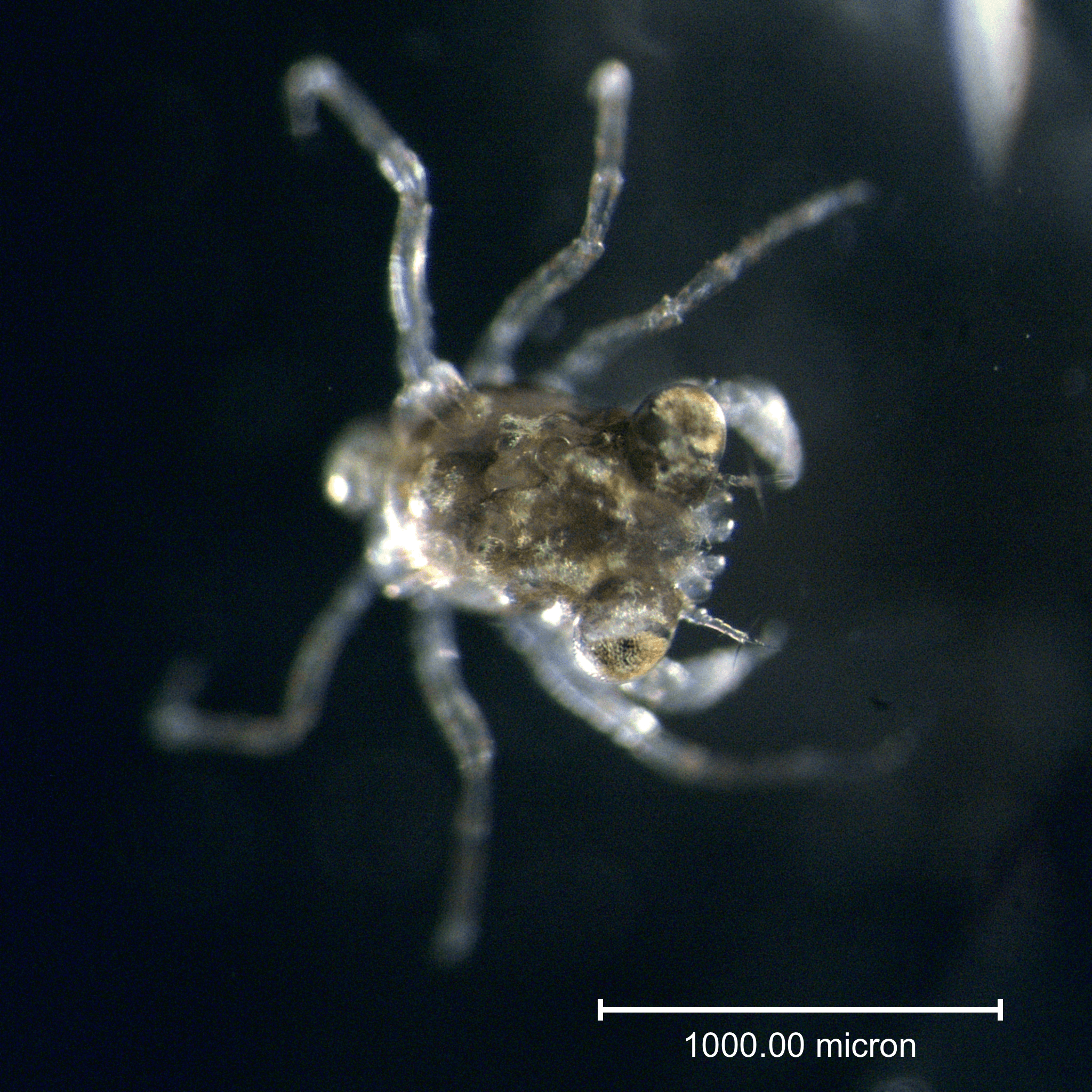
Figure 10: Crab larvae (?) from Almirante Bay
e. Cumacea
Order - hooded shrimp.
They live on soft bottoms, mostly marine. Species diversity increases with depth. They mainly feed on microorganisms and organic material from the sediment. Some can pierce organs of small crustaceans. They are important for fish food. , found throughout the world.


f. Ostracoda
Class.
Another small crustacean. Typically the size of a tomato seed when full grown. They brood, scavenge and actively search for prey in the night. During the day they like to hide in marine sediment. Sexually reproduce, important food for fish, and capable of producing an array of blue light displays.
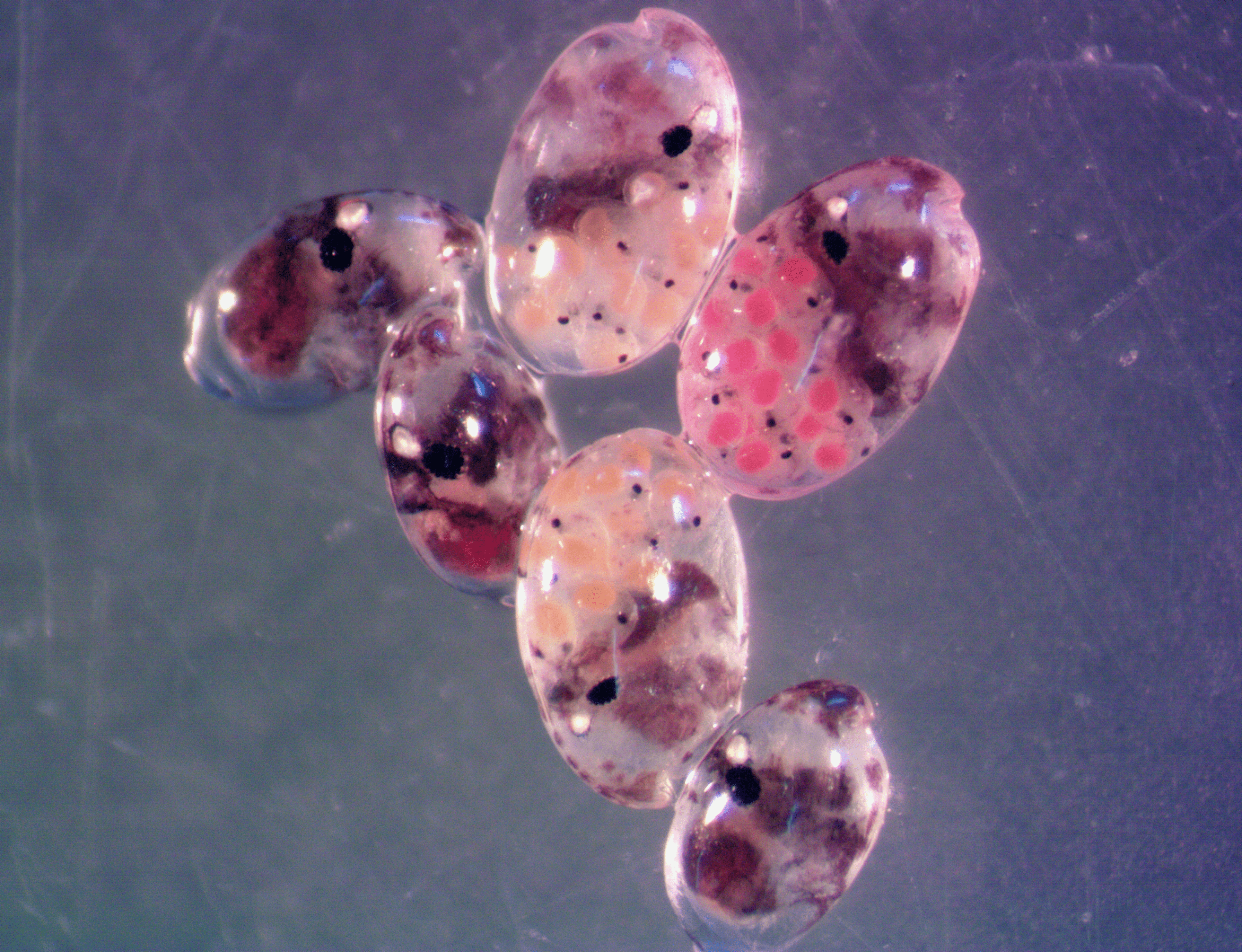
Figure 12: Skogsbergia lernerii - benthic ostracods from Almirante Bay. Three females with embryos and three males. The males are smaller with larger eyes. These were collected from the sediment near Punta Caracol at night using pieces of fish as bait. N. Lucey
5. Vertebrata
Fish and things with backbones.
6. Sipuncula
Also known as peanut worms, these unsegmented marine, benthic worms transport fluid and gas exchange in their coelom, which contains the respiratory pigment haemerythrin.
They also have tentacles surrounding their mouth that are thought to function as gills.
, licenced under [CC BY 3.0](https://creativecommons.org/licenses/by/3.0/). [Original image.](http://sipuncula.myspecies.info/sites/sipuncula.myspecies.info/files/styles/large/public/dsc_0081.png?itok=XyAmXNjN)](include/trepo/macrotaxa/sipuncula.png)
Figure 13: Figure by Kawauchi, Gisele Y. from Sipuncula, licenced under CC BY 3.0. Original image.

Source Code
The source code for this page can be accessed on GitHub by clicking this link.