Abstract
Climate change is disproportionately impacting coastal marine ecosystems through complex interactive multiple stressors. Microbes are without a doubt important in these coastal systems, yet the microbial ecology of many marine systems is still poorly understood. Our research aims to address pressing questions regarding which microbial assemblages are correlated to broad-scale ecosystem shifts in coastal habitats. We measured environmental oxygen, temperature, and pH weekly over the course of a year at four shallow sites (~20 m) along a natural ~15 km gradient in a Caribbean Bay. In addition to environmental parameters, we collected weekly sediment samples and determined the abundance and diversity of both the macrofauna and microbial communities (16S rRNA) throughout the year. At sites with severe deoxygenation (compared to more normoxic sites), we find a strong relationship between reduced macrofaunal abundance and diversity, as well as significant increases in microbial community instability. Using an integrative time-series approach we identify specific oxygen thresholds that appear to underpin changes in both macro- and micro- benthic diversity. Through space and time oxygen stress plays an extreme role in community destabilization.
Anvi’o interactive image: https://anvi-server.org/jscott/tropical_repo
Introduction
One of the most remarkable properties of coastal ocean deoxygenation (OD) is its stochastic, unpredictable nature. There are correlations between OD and temperature; as surface oceans waters warm coastal ecosystems are more likely to experience OD and this may lead to an increase in either the intensity and or duration of episodic hypoxic events. But the system is far more complex and cannot be explained simply by increasing temperature. There are a variety of physical drivers, including wind, water circulation, and nutrients, as well as biotic drivers, which include metabolic processing from both microbes and macro-benthos.
Does the microbial community have higher dispersion, or randomness at more stressful places or times? The Anna Karenina principle microbiological changes induced by many perturbations are stochastic, and therefore lead to transitions from stable to unstable community states (versus one stable happy state to another stable unhappy state). This concept is best pictured by Leo Tolstoy’s dictum that “all happy families look alike; each unhappy family is unhappy in its own way”). It assumes that healthy ecosystems possess a relatively stable microbial community that form tight clusters in ordination space, and that more dispersed microbial communities result from a variety of external stressors which disrupt this stability, leading to more dispersed microbial communities. This dispersal has been associated with a variety of negative outcomes for the overall ecosystem.
Here we test this principle and show that the dispersal of microbial communities is site specific along an environmental gradient, and that the stochastic nature of coastal deoxygenation leads to these microbial community upset. One seemingly big assumption to global OD diversity impact studies is that shallow, coastal regions are less susceptible to OD because of their relatively close proximity to the atmosphere and potential for re-oxygenation from surface waters
This study aims to show how coastal communities may be most at risk.
Expectations:
Microbial community instability at ‘stressed’ sites and at ‘stressed’ times
- Inner bay sites and during the hypoxic season
- Increased dispersal = increased instability
- Increased dispersal is a direct response to deoxygenation
When the microbial community is most unstable the benthic macrofauna diversity and abundance is most reduced (supporting the idea that the increased community dispersal is deleterious).
Together, we expect these community characteristics to represent an important and under-appreciated symptom of ocean deoxygenation stress, particularly under climate change.
notes to discuss: Episodic events are extremely difficult to predict but have severe ecosystem consequences. Rapid microbial changes in the water column can be difficult to predict (i.e. https://hypocolypse.github.io/) but have severe consequences (HABs), so much so that they are now being termed the 4th major driver of oceanic climate change.
Sites
- Almirante: seasonal low oxygen for past 8 years
- Pastores: seasonal low oxygen for past 8 years
- Cristobal: normoxic for past 8 years
- Punta Caracol: normoxic for past 8 years
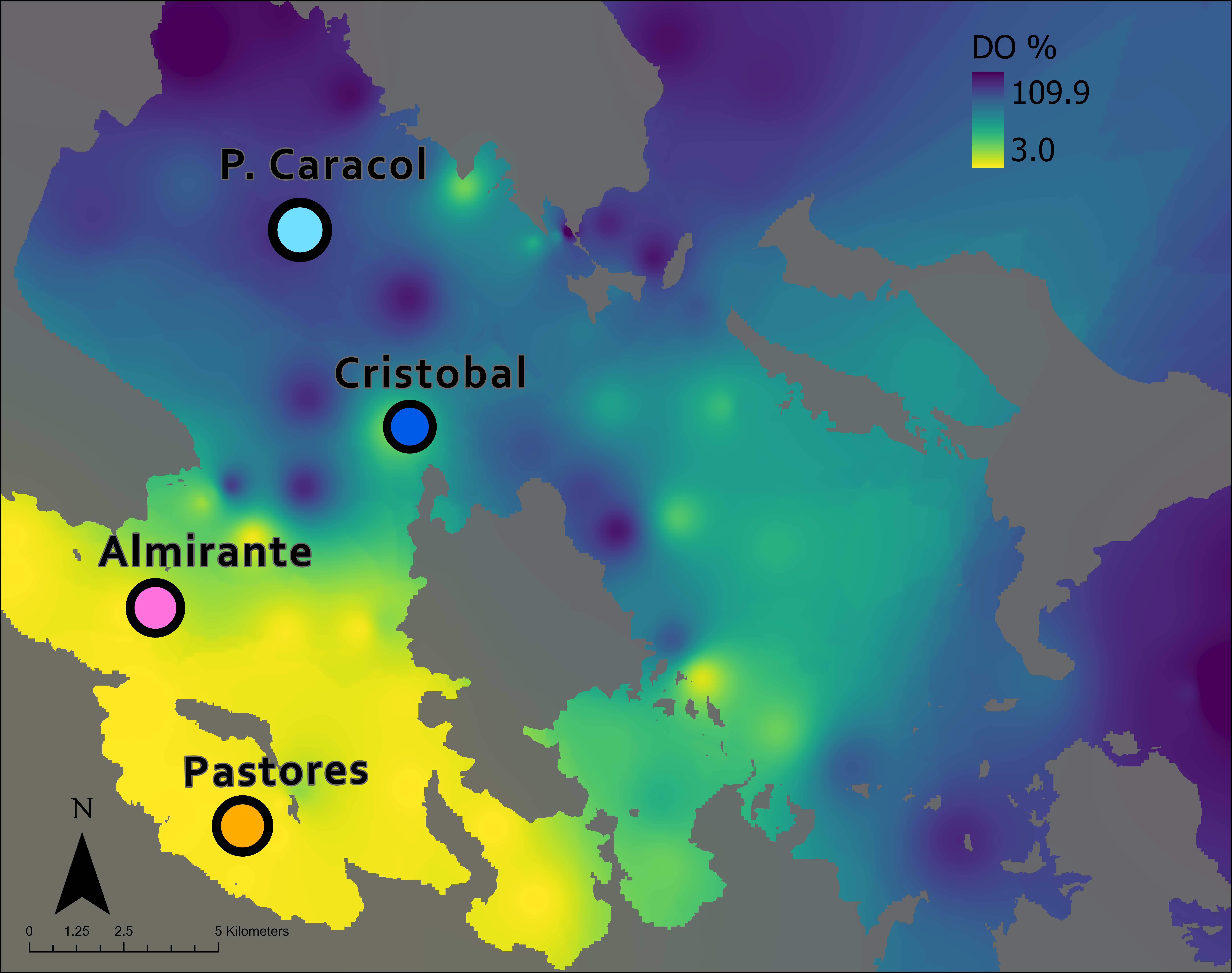
Figure 1: Four study sites within Almirante Bay. Color gradient shows the oxygen saturation (%) approx. 1 meter above the seafloor. Oxygen was measured at 83 sites throughout the bay on Sept. 24, 2017 and values interpolated with ArcGIS.
Coastal Deoxygenation
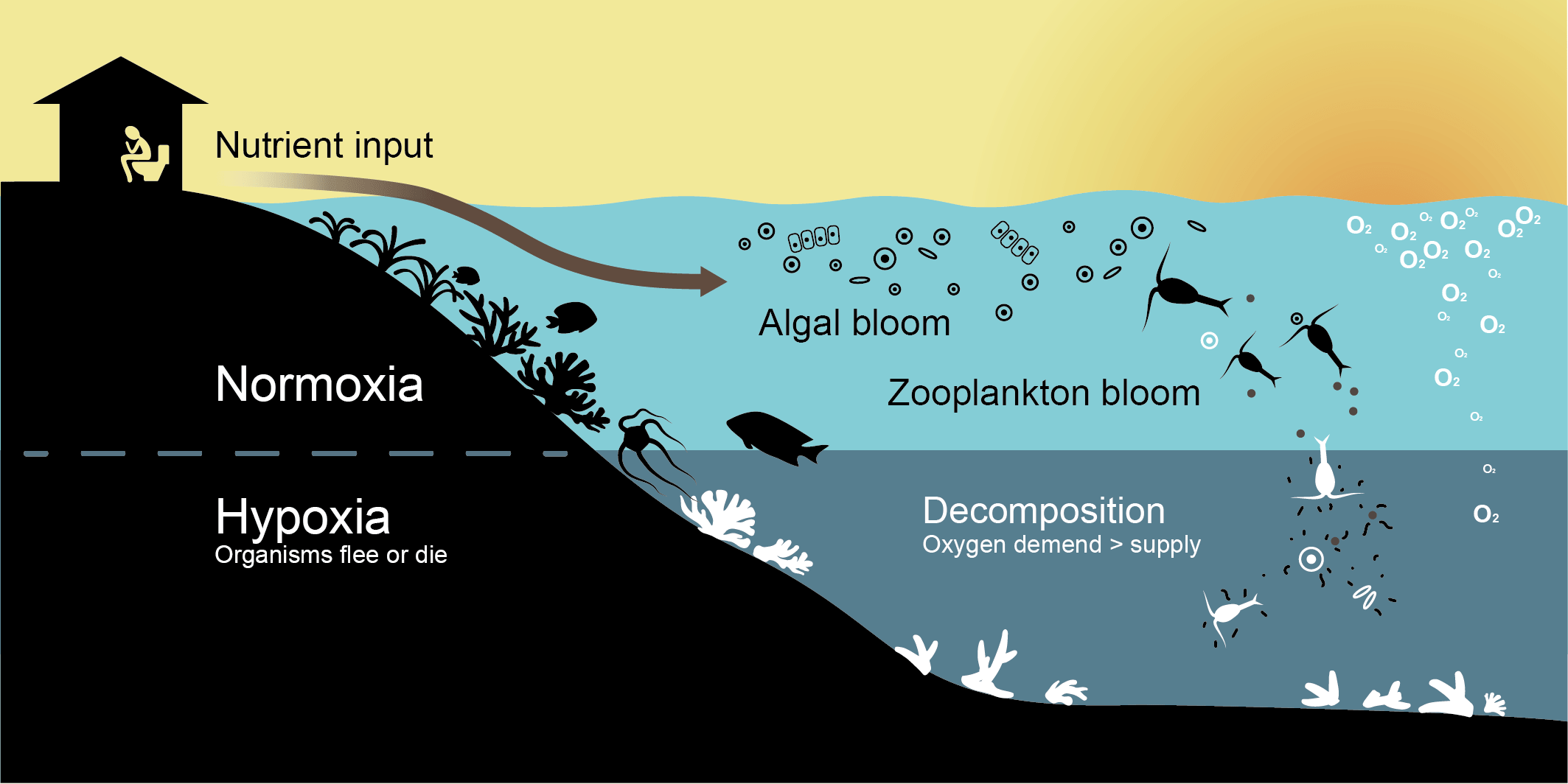
Figure 2: Process of Coastal Hypoxia in Almirante Bay
Benthos of Almirante Bay
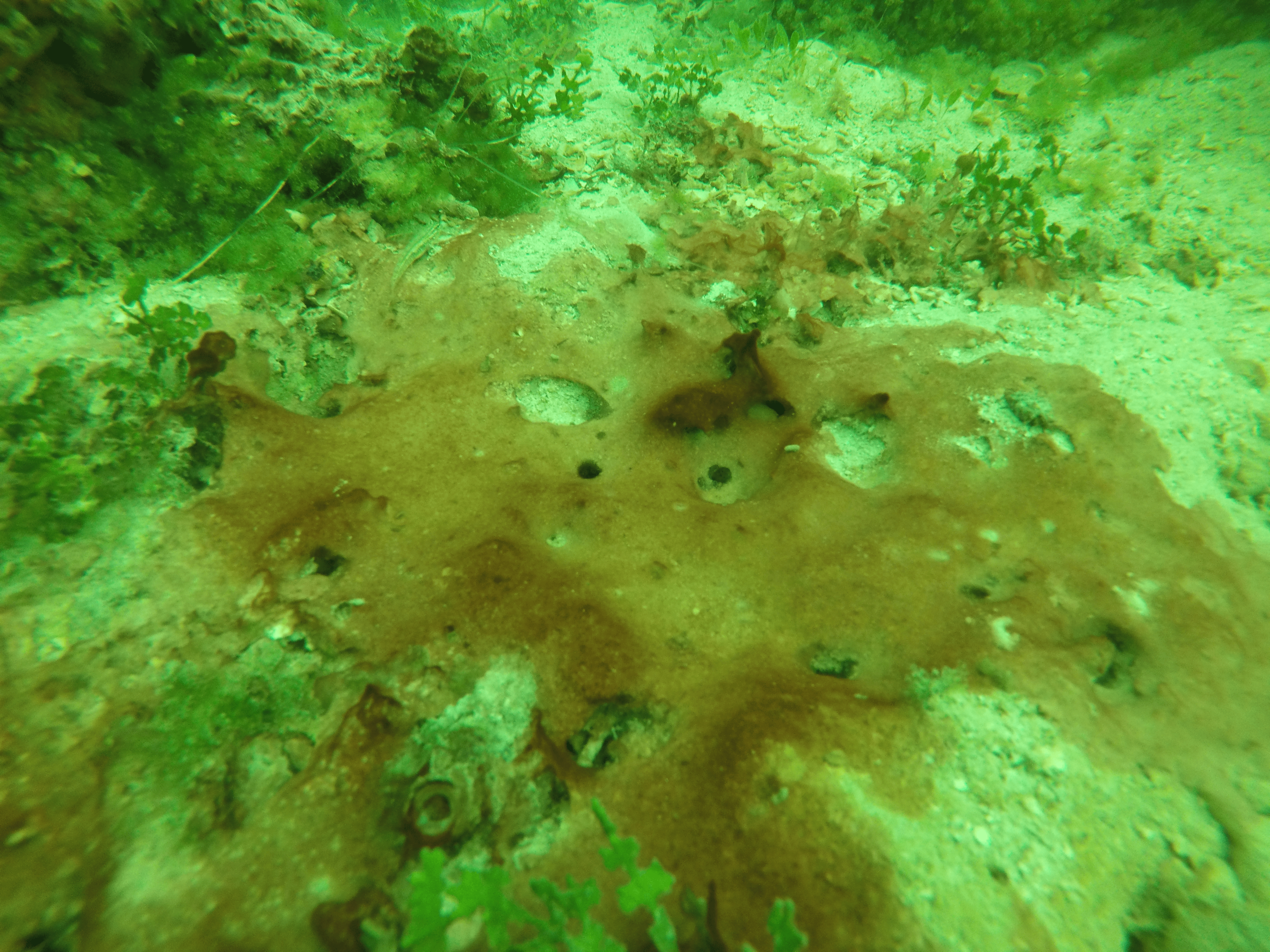
Figure 3: Bacterial Mats covering the benthos in Almirante Bay
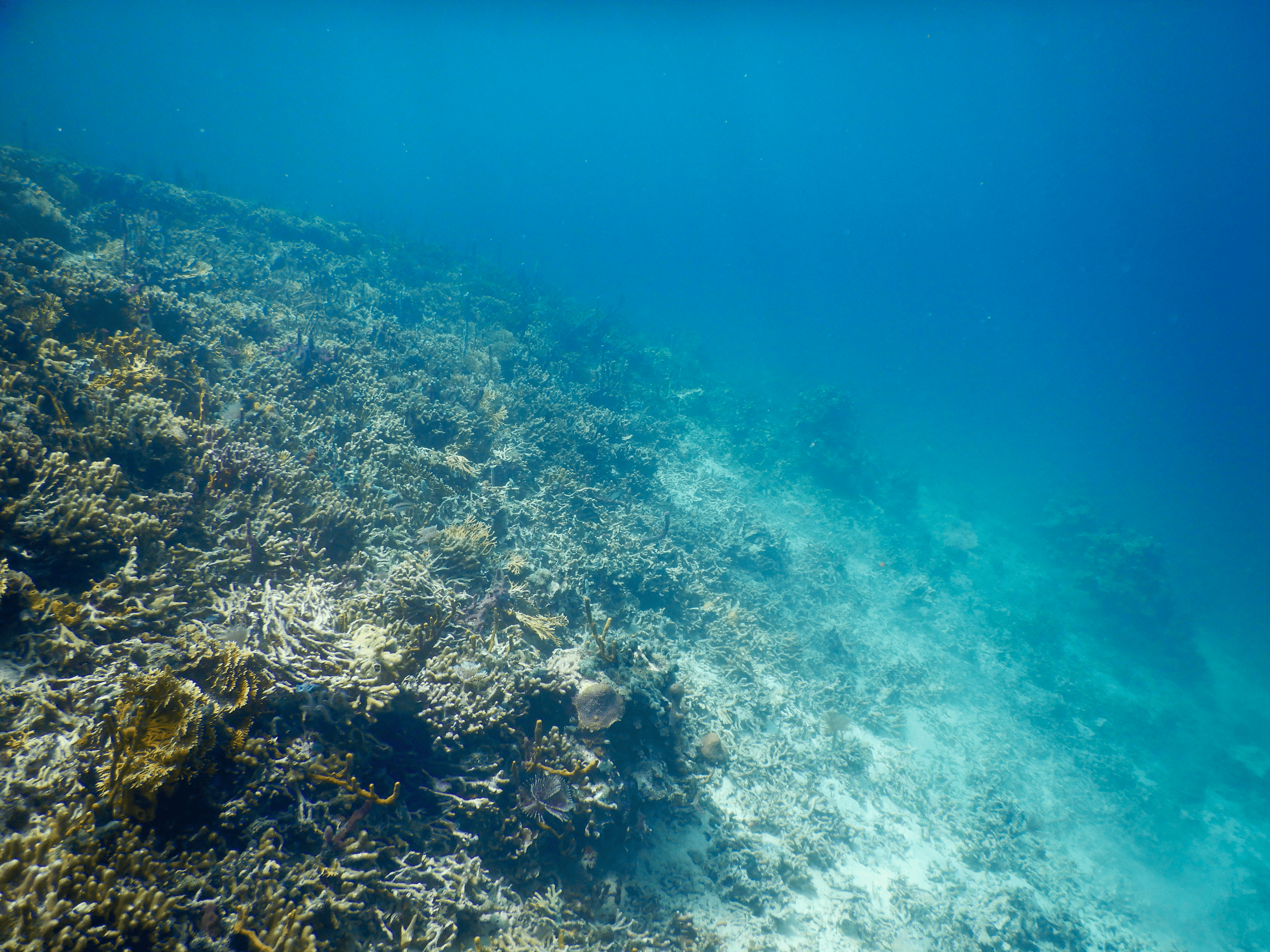
Figure 4: Coral reef near Almirante Bay that experienced prolonged, episodic deoxygenation in Sept. 2017 that resulted in a mortality event of benthos deeper than 3 meters.
Methods
We collected sediment from each site (~20 meters) with a 6" x 6" petite Grab sampler weekly. The sampler was attached lowered to the seafloor from a boat and collected 2 L of sediment from the surface of the seafloor. The material was immediately put into sterile bags after collection and stored on ice in the boat. Upon arrival at the lab, three technical replicate samples (1 mL) will be taken from each sample site for microbial analyses. Fresh sea water running through a 1 μm polyester felt filter bag was used to sieve the remaining sample material into three size classes. The sediment and detritus retained by the screens (125, 250 μm and 500 μm) was immediately stored in 4 % buffered formalin for 48 hours and then transferred to 70 % EtOH and stained with 2g/L Bengal Rose for long-term preservation. This prevents any calcium carbonate corrosion due to formalin and turns all specimens that were alive at the time of sampling a bright red color. Sample material was sorted and all living organisms (stained red) were removed under a dissecting microscope from the sediment. These organisms were then counted and identified to the lowest level possible.
Source Code
The source code for this page can be accessed on GitHub by clicking this link.